How Changing Temperatures in Pennsylvania Affect HVAC Performance
Living in Central Pennsylvania, you know exactly how spring weather can tease us with warm temperatures in one minute and then disappoint with a plunge in the numbers a few hours later.
You can wake up to frost on your windshield in Lancaster and shed your jacket by 5 p.m. in Harrisburg. Along the way, you may be tempted to turn your thermostat from heat to cool and back to heat.
At H.L. Bowman, we’ve spent over 75 years helping our neighbors in Red Lion, and all the surrounding areas navigate seasonal changes. While most people think the spring transition is just a matter of shutting off one HVAC unit and turning on another, it is actually one of the most mechanically stressful times of the year for your heating and cooling system.
We want to help you understand how seasonal temperature swings affect your HVAC equipment and what you can do to protect your investment. Here’s our guide to everything you need to know about HVAC and spring.
How the Weather Affects Your HVAC System
When the air outside goes from 35°F to 65°F in a matter of hours, the materials in your HVAC system physically expand and contract. Your ductwork, refrigerant lines, and even the heat exchanger in your furnace are susceptible to mechanical stress.
The good news is that HVAC systems are designed to handle seasonal stress. Flexible connectors in ductwork, expansion allowances for long runs of refrigerant lines, and pipe supports can prevent damage from seasonal cycles.
The bad news is that incorrect installation, poor maintenance, rigidly fastened lines, a lack of expansion joints and weakened metal, can cause problems. Over time, these issues can lead to loosened connections or tiny cracks that eventually cause leaks.
Besides being warmer, spring weather is also wetter. The combination of ground thaw and spring rains boosts humidity levels. Switching the AC on for the first time in May forces the system to work overtime to dehumidify and cool the damp air that has settled in your home.
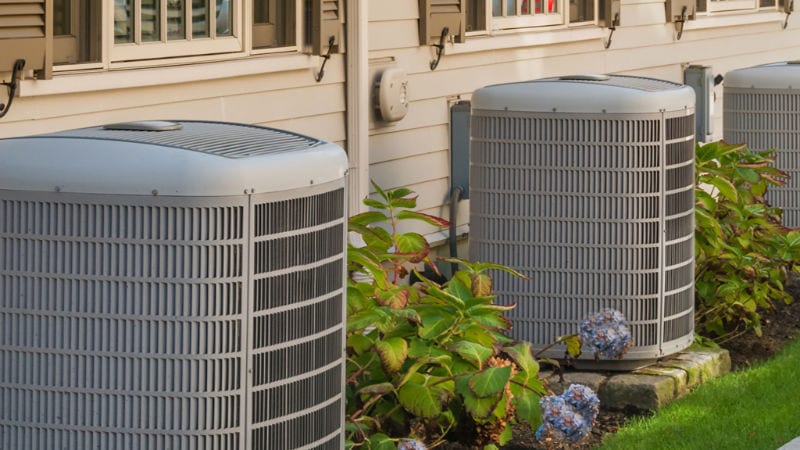
Spring pollen from trees, flowers, and weeds can dirty your outdoor condenser unit just as it’s powering up for the indoor cooling season. A blanket of debris over the coils can force your AC system to run hotter and longer.
How Unpredictable Is Spring Weather?
According to The Weather Channel, spring is notorious for extreme conditions because warm air is pushing north and cold air heading south out of Canada. The temperature contrast creates a rollercoaster of weather conditions.
In the Greater Harrisburg area, we typically experience numerous unpredictable days between mid-March and mid-May. These are the days when the high and low temperatures can be 20 to 25 degrees or more apart.
Typically, homeowners continue using the furnace at night through April and take a total break from both systems on those beautiful days when the temperature rises to 65°-75°F. Once overnight lows stay above 55°F, they turn the thermostat from heat to cool and bid their furnace goodbye for another season.
However, that “break” period is actually when the most damage can happen.
When a mechanical system sits idle for weeks and then suddenly must perform at capacity in 85°F weather on a day in May, that “cold start” is when components like capacitors and fan motors are most likely to fail.
Which System Does Spring Affect Most?
While both systems feel the strain, the cooling system generally takes the bigger hit during the spring transition.
The Air Conditioner
Your AC has been sitting dormant for five or six months. During that time, rodents may have chewed on wires, or debris may have clogged the drain line. When you set the thermostat to “cool” for the first time on a summer-like day, the compressor has to move settled oil and pressurized refrigerant instantly.
This is why most emergency calls happen on the first hot day of the year.
The Furnace
Your furnace is a hard worker in your Red Lion, home, but by spring, it’s finishing its winter marathon. The primary risk for the furnace during the transition is constant starting and stopping.
During those sunny spring days, solar heat can quickly warm the room where your thermostat sits, causing the furnace to shut down before it finishes a full heating cycle. As soon as the sun’s heat fades, the furnace kicks back on.
Turning on and off frequently, without completely finishing a cycle strains the igniter and flame sensor—the two parts most likely to fail just as the season ends.
The Heat Pump
Heat pumps are unique because they handle both heating and cooling. They are designed for this transition and use a reversing valve to switch the refrigerant flow, changing the unit from heater to cooler.
If a heat pump is not maintained, this valve can stick, leaving the system in heat mode on a warm spring day.
HVAC Tips for Spring in Greater Harrisburg
To prevent inefficiency and mechanical strain, follow these tips:
Filter Change: A dirty filter from the winter heating season will choke airflow to your AC or heat pump. Starting the cooling season with a fresh filter is the easiest way to prevent a frozen evaporator coil.
Outdoor Unit: Ensure there is at least two feet of clear space around your outdoor unit. Clear away the accumulated dead leaves and mulch.
Test the AC: Don’t wait for the temperature to reach 85°F to see if your AC works. On an April afternoon, in 70°F weather, turn it on for 10 minutes. If you hear weird noises or it doesn’t feel cold, you can get it fixed before the summer rush. Be sure to switch the thermostat from heat to off and wait a few minutes before setting it to cool.
Wean Off Heat: Set the heat at 66°F at night and use additional blankets if necessary. On a warm day in mid-spring, open south-facing windows to let your home heat naturally, without your furnace kicking on.
Close the windows before the outdoor temperature begins to fall at night. In late spring, when nighttime temperatures are consistently above the mid-50s, retire your furnace for the season. Switch the thermostat from heat to off.
Change the thermostat setting from off to 74-76°F when you turn on the AC for the season, starting the cooling transition.
Your cooling system will stay off on temperate days when the outdoors is warm but below 74°F. You can gradually lower the setting as the weather warms and higher outdoor temperatures are more consistent.
Schedule a Spring AC Tune-Up
At H.L. Bowman, we know how to keep Red Lion, PA, homes running efficiently through all types of spring weather. The best way to prevent a catastrophic failure is with a professional spring AC tune-up.
We clean the coils, test the capacitors, and ensure your refrigerant levels are perfect so you aren’t surprised by a breakdown in July. Call us at 717-287-5504 or request service online.

Need HVAC or Plumbing Service?
Contact the experts at HL Bowman.
Call us at 717-561-1206!